
A free, one-page printable worksheet that turns "where does our food come from?" into a hands-on investigation pupils run on their own lunch - no sign-up, no accounts, just a pencil and a browser.
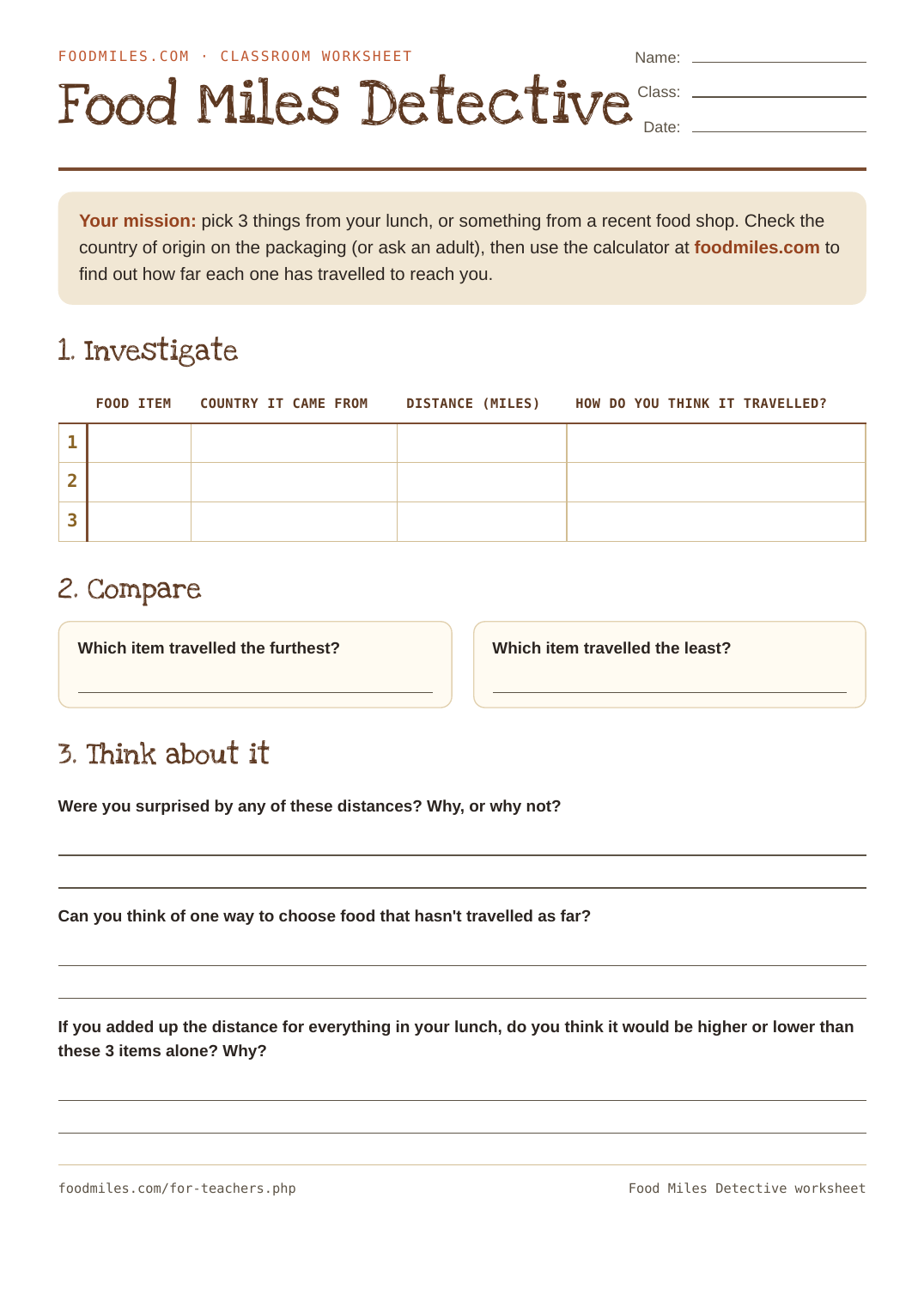
The full worksheet, ready to print single-sided on A4.
What's on it
The worksheet is built around three short sections that take a class from data collection to genuine reflection in about 20-25 minutes:
- Investigate - a table for three food items, where pupils record the country of origin, the distance travelled (using the calculator on our homepage), and a guess at how it got here.
- Compare - two quick prompts asking which item travelled furthest and which travelled least, turning raw numbers into a comparison.
- Think about it - three open reflection questions, from "were you surprised?" through to what might change if they chose food that travelled less far.
How to use it in class
Ask pupils to check two or three items from their lunch or a recent food shop beforehand - most packaging lists a country of origin, or an adult at home can help. In the lesson, look each item up on the food miles calculator together and fill in the table, then work through the compare and reflection sections either individually or as a class discussion. It's designed to work as a standalone 20-25 minute activity, or as the "main" section of the fuller Track Your Own Lunch lesson plan.
Best suited to KS2-KS3 (roughly ages 7-14), and works across geography and maths lessons. No sign-up, no data collected from pupils - everything stays on paper.
More classroom resources
Six ready-to-teach starter/main/plenary plans, including the one this worksheet supports.
A printable week-long booklet project, with its own certificate of completion.
The full hub of activities, games and printable resources for teachers.